From Patient Voices to System Change: TFRD’s Recent Advocacy for Rare Disease Drug Access in Taiwan
The Taiwan Foundation for Rare Disorders (TFRD), established in 1999, has evolved from a patient advocacy organization into a comprehensive support network for people living with rare diseases and their families. It also serves as an umbrella organization for many rare disease patient groups in Taiwan.
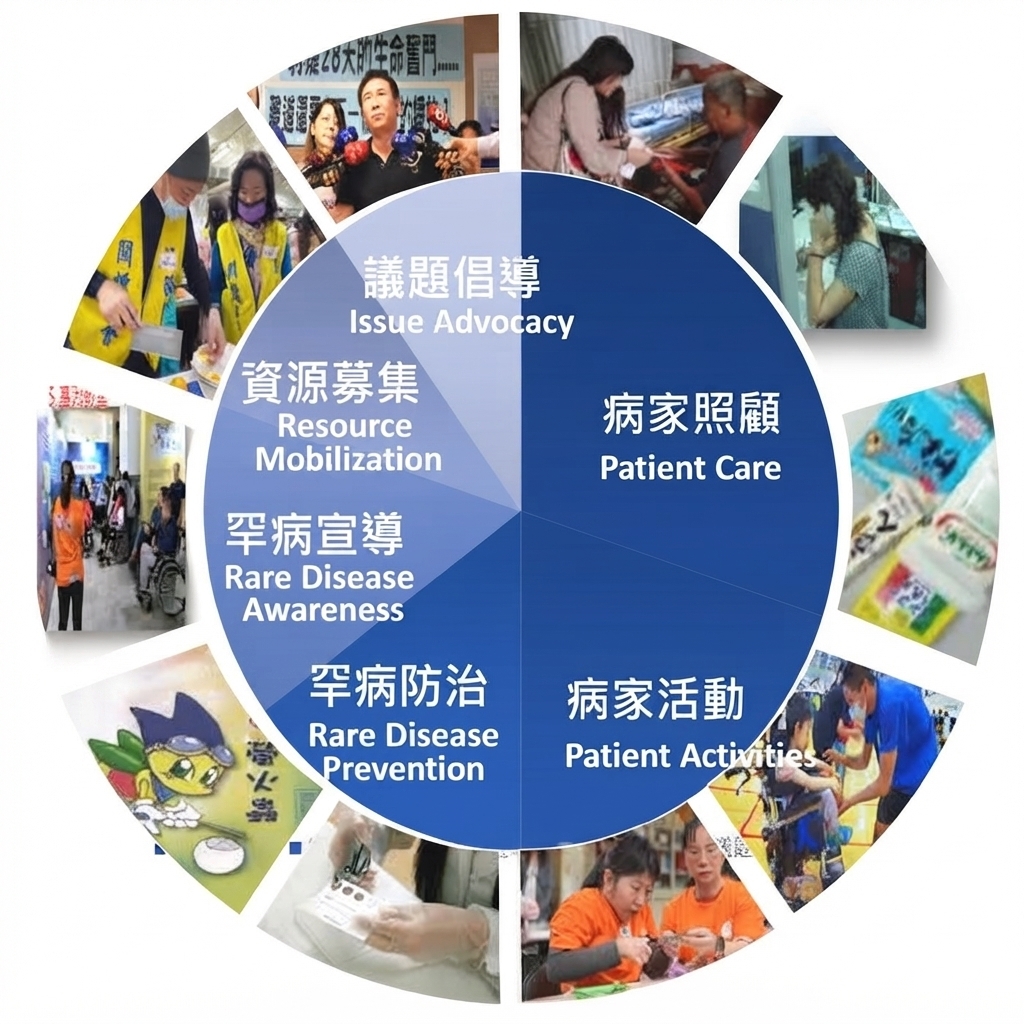
Over the past 27 years, TFRD has worked across four major areas: strengthening patient and family support, advancing policy advocacy, raising public awareness, and collaborating with healthcare professionals to improve care. In recent years, improving timely and equitable access to orphan drugs has become a central policy priority.
Access to treatment depends on more than regulatory approval. It involves orphan drug designation, marketing authorization, Health Technology Assessment (HTA), reimbursement review under the Pharmaceutical Benefit and Reimbursement Scheme (PBRS), patient participation, and sustainable financing. TFRD’s advocacy has therefore increasingly shifted from individual cases toward system-level reform.
Taiwan’s Rare Disease Framework and the Reimbursement Gap
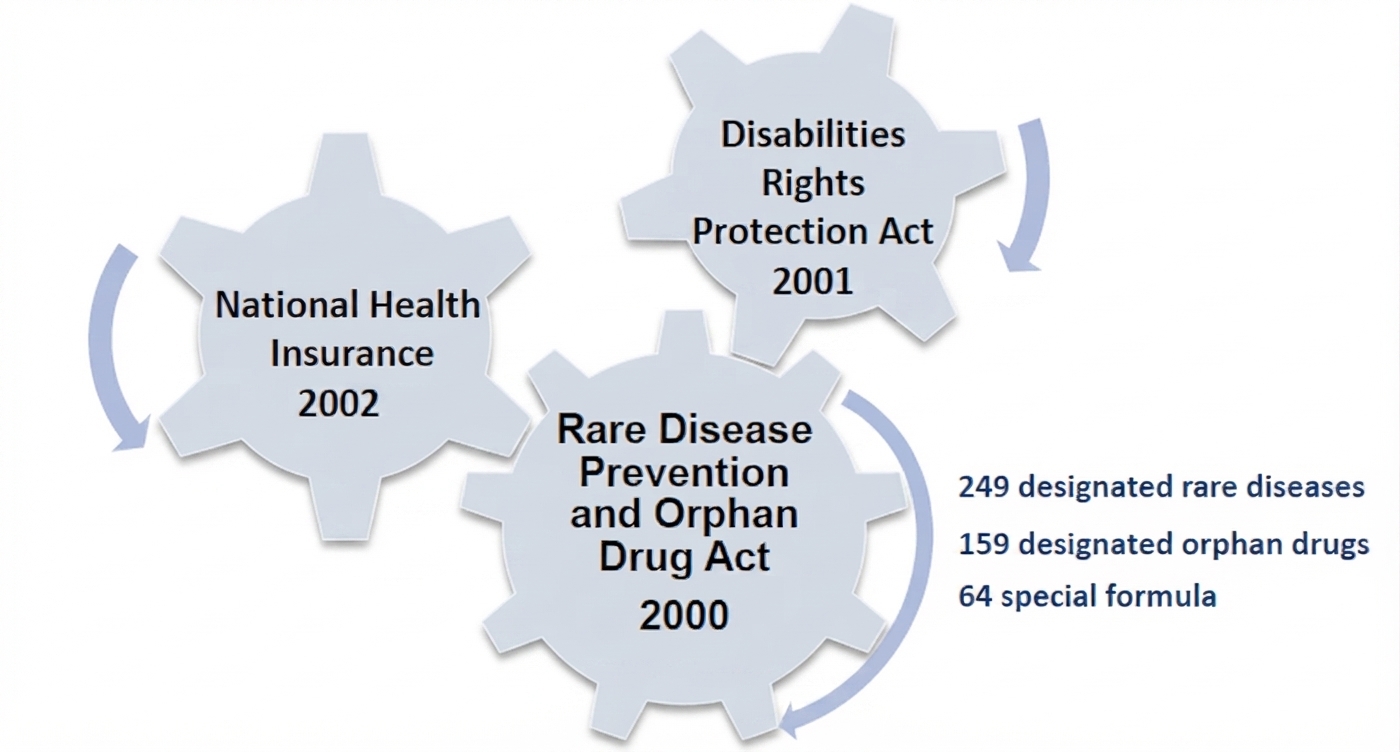
Taiwan’s rare disease care system is primarily supported by the Rare Disease Prevention and Orphan Drug Act and the National Health Insurance (NHI) system.
Under the Act, a rare disease is defined as a condition affecting fewer than 1 in 10,000 people, and the government is required to support diagnosis and treatment. Taiwan has designated 249 rare diseases, 159 orphan drugs, and 64 special nutritional formulas. (Updated to August, 2026)
Rare diseases are classified as severe illnesses under the NHI, with most related medical expenses covered. Patient rights in education, employment, transportation, and social support are also protected under the People with Disabilities Rights Protection Act. This framework has been built progressively through sustained engagement between patient organizations and government.
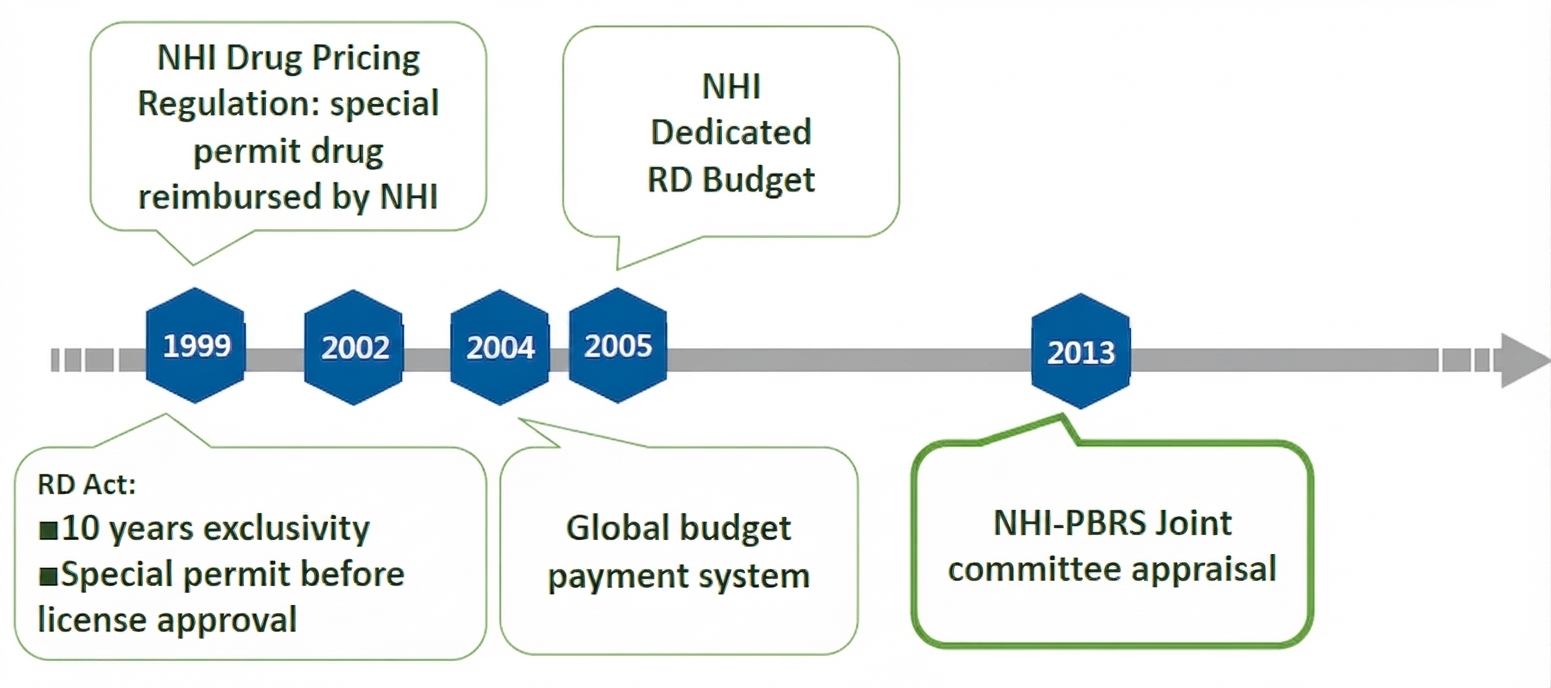
A further safeguard is the dedicated rare disease budget. Following the introduction of Taiwan’s global budget system in 2004, TFRD advocated for a separate budget to prevent hospitals from avoiding high-cost rare disease patients. The dedicated budget was established in 2005, protecting access to treatment while reducing financial pressure on healthcare providers.
Despite these mechanisms, regulatory approval does not necessarily translate into timely patient access.
Before 2013, growth in NHI reimbursement largely paralleled orphan drug designation. After PBRS was introduced in 2013, however, a clear bottleneck emerged. For almost three years, no new orphan drugs received reimbursement, while the average waiting period increased from 5.2 months before PBRS to 30.3 months afterward.
These delays became a major catalyst for TFRD’s new wave of advocacy beginning in 2022.
A New Advocacy Strategy Since 2022
TFRD’s recent advocacy has focused on two interrelated objectives: strengthening meaningful patient participation in reimbursement decisions and securing a sustainable dedicated rare disease budget.
A policy recommendation paper outlining six proposed reforms established the strategic direction for this work. TFRD also developed public education materials and expanded engagement with the Legislative Yuan to elevate rare disease issues within broader policy discussions.
One key recommendation was to strengthen patient participation in HTA and reimbursement decision-making.
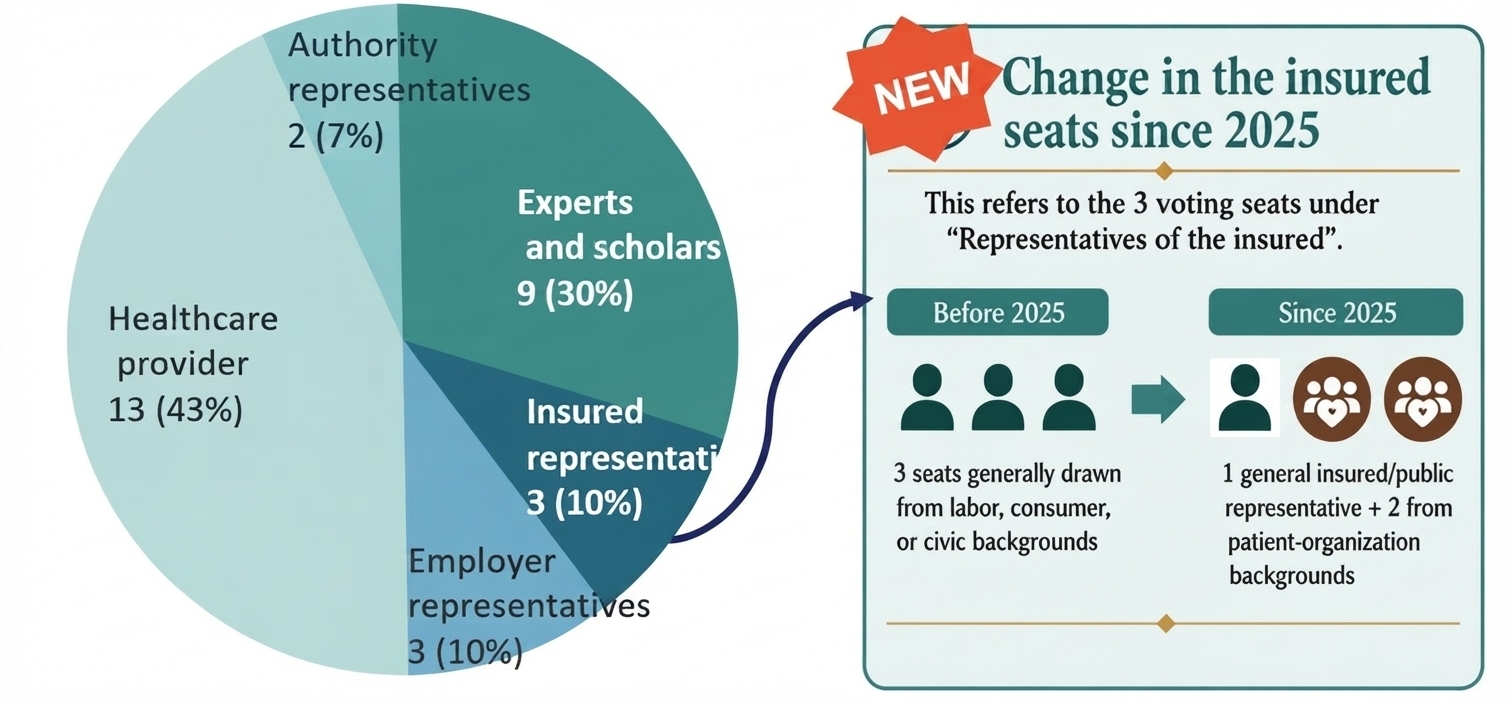
Previously, all three voting seats representing insured persons in the PBRS were held by industry representatives. Two of these seats are now allocated to patient organizations, representing an important step toward institutionalizing patient perspectives in formal decision-making.
TFRD also advocated for clearer integration of patient evidence into the reimbursement process. Although the NHI Administration had established an online platform for collecting patient input before PBRS discussions, it remained unclear how this information was assessed or communicated to decision-makers.
Beginning in 2026, patient input can be presented directly at Expert Advisory Meetings. This allows patient experience to enter the assessment process at an earlier stage and creates a more formal pathway for patient evidence.
Converting Patient Experience Into Evidence
TFRD has developed a practical support model to help patient groups participate effectively.
When an orphan drug is posted on the patient input platform, TFRD provides survey tools, helps collect patient experiences, supports the preparation of official patient statements, and assists with supplementary materials such as letters and real-world evidence. Patient organizations are also supported in attending preparatory workshops organized by patient alliances such as TAPO and relevant government pre-meetings.
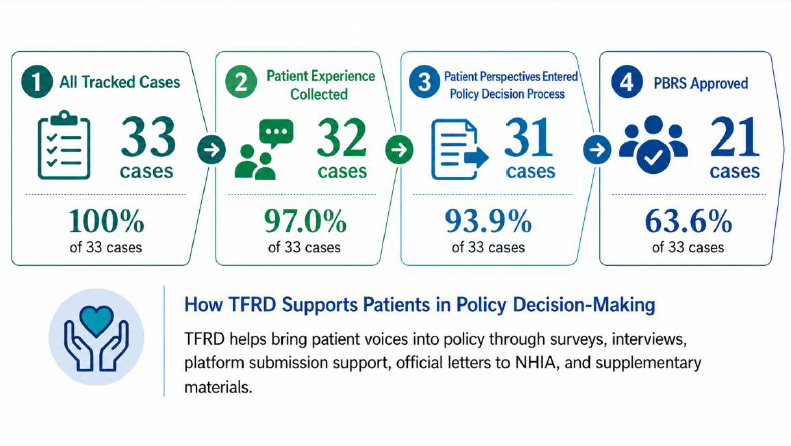
To date, TFRD has followed 33 new orphan drugs through this process. Patient opinions for 31 drugs were successfully presented to PBRS, and 21 drugs were subsequently approved for reimbursement.
These results demonstrate that patient participation can extend beyond symbolic consultation. When patient experiences are systematically collected and structured, they can become part of the evidence considered in reimbursement decisions.
Ultra-Rare Disease: Evidence From Three Patients
One case involved an ultra-rare disease affecting only three patients in Taiwan. Because of the extremely small population, TFRD contacted each family individually and supported their submissions.
All three patients had received treatment—two through clinical trials and one through a compassionate-use programme. Patient evidence therefore focused on observable changes following treatment.
The father of the third patient expressed gratitude that his child had been born at a time when treatment existed. At the same time, the family emphasized that compassionate use could not provide sustainable long-term access and hoped for NHI reimbursement.
The case illustrates that even with extremely small patient numbers, structured accounts of treatment experience can provide meaningful evidence.
LHON: Preparing Evidence Before Formal Review
A second case involved Leber’s Hereditary Optic Neuropathy (LHON), a mitochondrial disorder affecting 13 patients in Taiwan. Some had been paying out of pocket for idebenone since 2019.
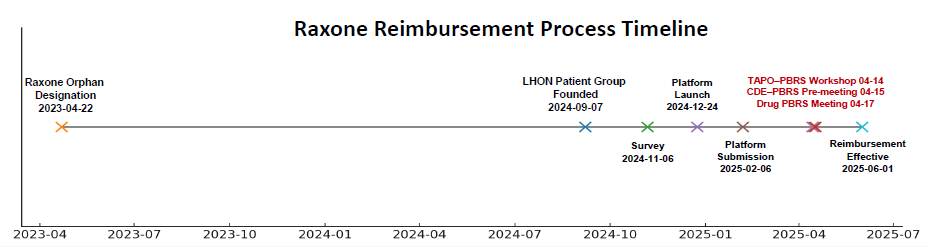
Raxone received orphan drug designation in Taiwan in 2023, but most patients continued to self-finance treatment. In 2024, TFRD helped patients and families establish a patient group and conducted a 53-question survey addressing treatment experience and quality of life.
Some patients reported clear functional improvements. One patient, for example, described improved vision, greater independence at school, and the ability to see writing on the classroom whiteboard.
TFRD consolidated these experiences into a patient statement. Both the survey and statement were completed before Raxone was formally posted on the patient input platform.
Raxone was subsequently approved for NHI reimbursement. The case demonstrates the value of early engagement and preparing patient evidence before formal reimbursement review begins.
Protecting the Dedicated Rare Disease Budget
The second major focus of TFRD’s recent advocacy has been the sustainability of the dedicated rare disease budget.
The underlying principle is that rare disease patients, as a high-risk minority within a social insurance system, should receive timely and equitable support through social risk-sharing.
In 2022, TFRD identified a cumulative unspent balance of NT$3.714 billion between 2017 and 2022, associated with delays in drug reimbursement. An expert forum was convened to examine potential solutions. The NHI Administration subsequently improved budget execution, which reached 99.5% in 2024.
However, the budget remained largely based on five-year historical expenditure averages, limiting its ability to anticipate future needs. TFRD therefore proposed a scientific three-component budgeting model and diversified funding sources. Following this advocacy, the Minister also committed to additional government funding to improve opportunities for new rare disease medicines to obtain reimbursement.
Further challenges emerged during negotiations for the 2025 budget, when some hospital representatives proposed eliminating the dedicated rare disease budget entirely.
TFRD argued that the budget is an essential mechanism for meeting the medical needs of rare disease patients and should not be interpreted simply as competition for resources with other patient populations.
The experience also highlighted the need for earlier engagement with government officials, legislators, and other decision-makers.
TFRD subsequently worked with Legislator Wang Cheng-Hsu, a physician and long-standing supporter of rare disease issues. Under his leadership, the Rare Disease Rights Promotion Committee was established within the Hou-Sheng Club, strengthening communication between patient organizations and policymakers.
A further challenge arose when the NHI Administration changed the calculation method for the 2026 budget, producing a proposed amount below TFRD’s estimate. TFRD mobilized 56 patient groups to petition the Ministry of Health and Welfare, calling for a stable, predictable, and transparent budget formula. Although an agreement on the following year’s budget was ultimately reached, TFRD hopes that future negotiations can begin earlier and proceed through a more regular, transparent, and predictable process.
With the 2027 budget negotiations approaching, TFRD is grateful that the NHI Administration has taken the initiative to consult with us in advance. Although the outcome remains uncertain, TFRD hopes that this early dialogue will develop into a timely and regular communication mechanism for future budget discussions, rather than occurring only in response to budget disputes.
Building a Two-Way Model of Patient Engagement
TFRD’s experience has also clarified the complementary roles of patient advocacy groups and patient support groups.
Patient advocacy groups act as intermediaries between patients and the professional policy environment. They translate medical, treatment, and policy information into accessible language while converting patient experiences into structured input for healthcare professionals, hospitals, and government agencies.
Patient support groups remain closer to patients and families, identifying practical needs, providing psychosocial support, and encouraging participation in formal feedback processes.
Together, these functions create a two-way model: professional information is translated for patients, while patient experiences are translated into evidence for policy and decision-making. TFRD aims to further standardize this model and apply it across additional rare diseases.
Lessons From Recent Advocacy
TFRD’s recent experience highlights five factors essential to effective patient advocacy:
1. Clear goals and guiding principles to ensure consistent policy communication.
2. Transparent and accessible information that translates complex medical and policy issues into patient-friendly language.
3. Cross-sector collaboration among patient organizations, healthcare professionals, hospitals, advocacy groups, legislators, and other stakeholders.
4. Structured government engagement that allows individual patient experiences to inform policy-level discussions.
5. Flexible, evidence-based advocacy that adapts to new treatments, policy changes, and real-world evidence.
Together, these elements help move patient engagement from individual testimony toward a more systematic and credible
contribution to healthcare decision-making.
The Next Stage: Institutionalizing Patient Engagement
TFRD has identified three priorities for the next phase of advocacy.
First, we hope to promote a faster and more focused review pathway for rare disease drugs. In our recommendation paper, we proposed establishing a rare disease subcommittee under the PBRS, similar to NICE’s Highly Specialised Technologies programme in the United Kingdom. Taiwan already has a Rare Disease Review Committee under the Rare Disease Act, and we hope this committee can potentially play a similar role in the future.
Second, patient participation should become more systematic. This requires greater clarity regarding the types of data needed by PBRS representatives, clinical experts, HTA assessors, and other decision-makers. TFRD also hopes to collaborate with the CHPTA in developing guidance for patient participation.
Third, HTA reports should more effectively reflect patients’ real needs, particularly as gene therapies and expanded indications increasingly enter reimbursement review. This will also increase the importance of real-world evidence.
Conclusion
TFRD’s recent advocacy demonstrates that meaningful patient engagement requires more than an opportunity to submit comments. It depends on preparation, evidence collection, translation, collaboration, and formal mechanisms through which patient perspectives can influence decisions.
Similarly, the dedicated rare disease budget represents more than a financing mechanism. It reflects the principle of social risk-sharing and society’s commitment to supporting a small population facing exceptionally high medical needs.
Recent progress—including stronger patient representation in PBRS, earlier incorporation of patient input, improved budget execution, and earlier dialogue with government—shows that institutional change is possible.
TFRD will continue working with patients, healthcare professionals, government agencies, legislators, and other stakeholders to build a more sustainable rare disease system and to advance patient participation in Taiwan toward a more mature and institutionalized model.
Author: Ruth Chen Date: August, 2026